

DEGREES
FIRST NATION HEALTH ADMINISTRATION
The First Nation Health Administration degree prepares students to manage health care services in their communities according to their own laws, practices, and customs.
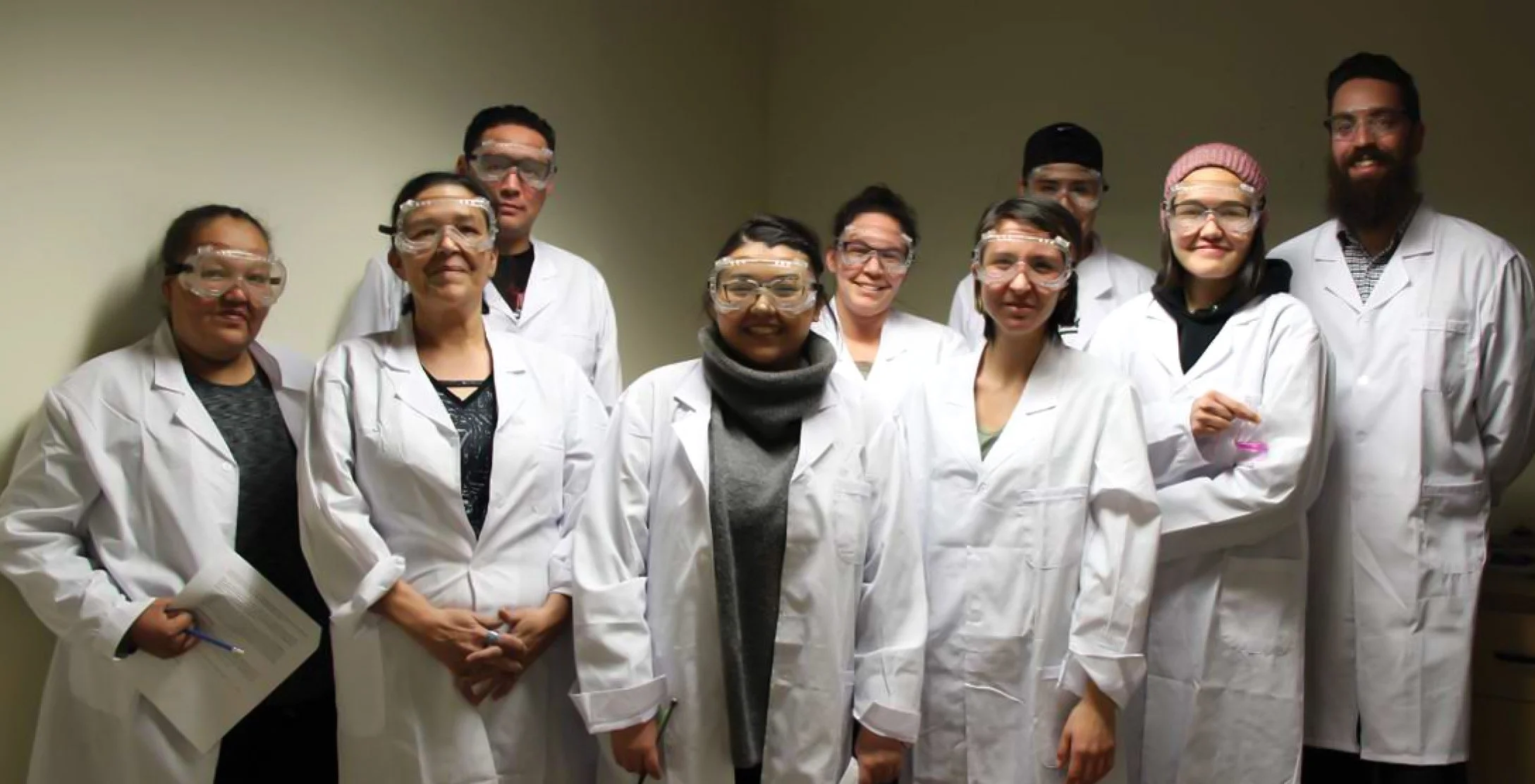
PROGRAM DETAILS
The First Nation Health Administration (FNHA) degree is based on Indigenous worldview by way of language, culture, and traditional practices. It also focuses on Western theories and practices in health administrative management that support the delivery of Indigenous healing and wellness practices.
This program addresses the growing need to close the gap between First Nation health concerns and the policies that drive the creation of programs and services. The FNHA program strives to increase capacity in the community and ensure the sustainability of health programs and services in the community.
Students have the option to take one of three Indigenous languages, Nehiyaw, Anishinaabe, or Stoney Nakota throughout the three years. Courses will also include Indigenous ways of knowing and political thought in the areas of cultural resurgence, governance, leadership, decolonizing research, and traditional medicines.
The FNHA program is delivered in a four-year period, offering in-person courses from fall to spring. Each semester has four in-person courses for the fall and winter and two for spring semester. Each course is 3 credits for a total of 30 credits per year and 120 for the 4-year degree program.
The creation of an advanced First Nations Health Administration 4-year Degree is being offered by request of the First Nations communities in the Yellowhead Tribal College Tribal Council area. Following the successful completion of the Indigenous Health Support Worker Diploma in 2021, the communities saw a need to expand the health support worker program by creating a 4-year administration degree to help support the First Nations based models of delivering health care based on their values, traditions and practices.
This program is for First Nation, Metis, Inuit members or any one who is interested in learning more about Indigenous health, high school graduates, mature students with English 30-2 or English 30-1, and for current health staff who need professional development.
ADMISSION REQUIREMENTS
Applicants are required to have completed either English 30-1 with at least 55%, or English 30-2 with at least 65%, and Math 20-2 or higher.
Applicants may also enter through Mature Status defined as follows: (i) Minimum age of twenty-one; (ii) Successful completion of a skills appraisal test in Math and English. Applicants may also enter with special permission from the Department Head of First Nation Health Administration Degree.
A 500-word personal statement, current Child Intervention Check, and current Criminal Record Check are required when applying to this program.
APPLICATION DEADLINE
Mid-May for admission in the fall .
Department Head
Normie Carlson
Department Head of Indigenous Health
normie.carlson@ytced.ca
(587) 525-6152 Ext. 510
CAREER/ACADEMIC OPPORTUNITIES
FN Health Director/Manager
FN Health Administrators/Supervisors FN Health Navigator
Health Liaison for both rural and urban health centers, hospitals, and clinic. First Nation Wellness Worker, Coordinator or Liaison Worker
Indigenous Cultural Support Worker Indigenous Health Coordinators Indigenous Health Educator
Indigenous Mental Health and Addictions Cultural Helpers
PROGRAM OUTCOMES
Successful delivery of Year 1, 2, 3, and 4 of the FNHA degree
High placement of FNHA graduates in health administration, management jobs at both the community, federal, provincial, municipal level;
Increased number of First Nation people in Health Administration/Management positions in Alberta;
Understand the context of health from a contemporary and historical perspective;
Understand how First Nations health is embodied in cultural competency, and is seen as individual, fluid, and evolving;
Critically examine the biomedical model and First Nations approaches to health and wellness;
To define the differences between First Nations and Western worldviews and ways of life and how it impacts health;
To create health programs that will have meaning to First Nations people.
The capacity to promote and advocate for First Nations peoples’ health and wellness.
EDUCATION PATHWAY
Following the successful completion of the Indigenous Health Support Worker Diploma, the graduates may continue on to the second year of the First Nation Health Administration Degree. Current health administration employees can also take any number of courses for professional development purposes.
COMMUNITY PARTNERSHIPS
YTC Council, First Nation Health Centres, NNADAP programs, Youth Mental Health programs, and Edmonton area hospitals.
PROGRAM PLAN
YEAR 1
| FALL | COURSE TITLE | CREDITS |
|---|---|---|
| IHSW 100 | Interpersonal Communication and Basic Councelling Skills | 3 | ENGL 250 | Writing Skills | 3 | IHSW 104 | Mental Health | 3 |
| ▼ CHOOSE ONE LANGUAGE COURSE ▼ | ||
| CREE 100 | Introduction to Cree Language and Culture | 3 |
| ISGA 115 | Introduction to Stoney | 3 |
| ANIS 150 | Introductory Anishinaabe | 3 |
| WINTER | COURSE TITLE | CREDITS | IHSW 105 | Infectious Chronic and Contagious Diseases | 3 |
|---|---|---|
| IHSW 202 | Healing Through Community Development | 3 |
| IHSW 207 | Crisis Intervention and Communication | 3 |
| IGOV 306 | Introduction to Indigenous Community Based Research | 3 |
| SPRING | COURSE TITLE | CREDITS |
|---|---|---|
| IHSW 103 | Family Relations | 3 |
| INFO PRO 200 | Information Processing | 3 |
YEAR 2
| FALL | COURSE TITLE | CREDITS |
|---|---|---|
| MNGT 100 | Introduction to Management | 3 |
| IGOV 311 | Protocols for Indigenous Goverance | 3 |
| IGOV 304 | Indigenous Governance | 3 |
| IHSW 204 | Nutrition and Health | 3 |
| WINTER | COURSE TITLE | CREDITS |
|---|---|---|
| COMM 300 | Communications Conflict Management and Mediation | 3 |
| ACCT 100 | Introductory Accounting | 3 |
| IHSW 106 | Determinants of Health Affecting Indigenous Peoples' and Communities | 3 |
| ▼CHOOSE ONE LANGUAGE COURSE▼ | 3 | |
| CREE 200 | Cree Language and Culture II | 3 |
| ISGA 125 | Advance Stoney Language and Culture | 3 |
| ANIS 250 | Intermediate Anishinaabe | 3 |
| SPRING | COURSE TITLE | CREDITS |
|---|---|---|
| BETH 200 | Business Ethics | 3 |
| LEAD 200 | Leadership | 3 |
YEAR 3
| FALL | COURSE TITLE | CREDITS |
|---|---|---|
| IGOV 310 | Indigenous Peoples' and Technology for Governance | 3 |
| LING 103 | Traditional Kinship Structures in a Contemporary Mode | 3 |
| ORGB 286 | Human Resourse Management | 3 |
| FNHA 300 | Understanding Treaties and the Medicine Chest Clause | 3 |
| WINTER | COURSE TITLE | CREDITS |
|---|---|---|
| FNHA 301 | Indigenous Health Policy in Canada | 3 | IHSW 203 | Addictions & Treatment | 3 | ORGB 264 | Organizational Behaviour | 3 |
| IHSW 209 | Development Across the Lifespan | 3 |
| SPRING | COURSE TITLE | CREDITS |
|---|---|---|
| IGOV 305 | Indigenous Political Thought and Resurgence | 3 |
| HADM 339 | Organization of the Health Care System | 3 |
YEAR 4
| FALL | COURSE TITLE | CREDITS |
|---|---|---|
| LAW 369 | Business Law | 3 | IGOV 307 | Communication for Indigenous Governance | 3 |
| HADM 336 | Community Health Planning | 3 |
| ▼ CHOOSE ONE LANGUAGE ▼ | 3 | |
| CREE 300 | Cree Language and Culture IV | 3 |
| ISGA 215 | Advanced Stoney | 3 |
| ANIS 250 | Intermediate Anishanaabe II | 3 |
| WINTER | COURSE TITLE | CREDITS |
|---|---|---|
| FNHD | First Nation Health Co-op I (January to April 30) | 6 |
| SPRING | COURSE TITLE | CREDITS |
|---|---|---|
| FNHD | First Nation Health Co-op II (May to June 30) | 6 |