

DIPLOMA
INDIGENOUS HEALTH SUPPORT WORKER
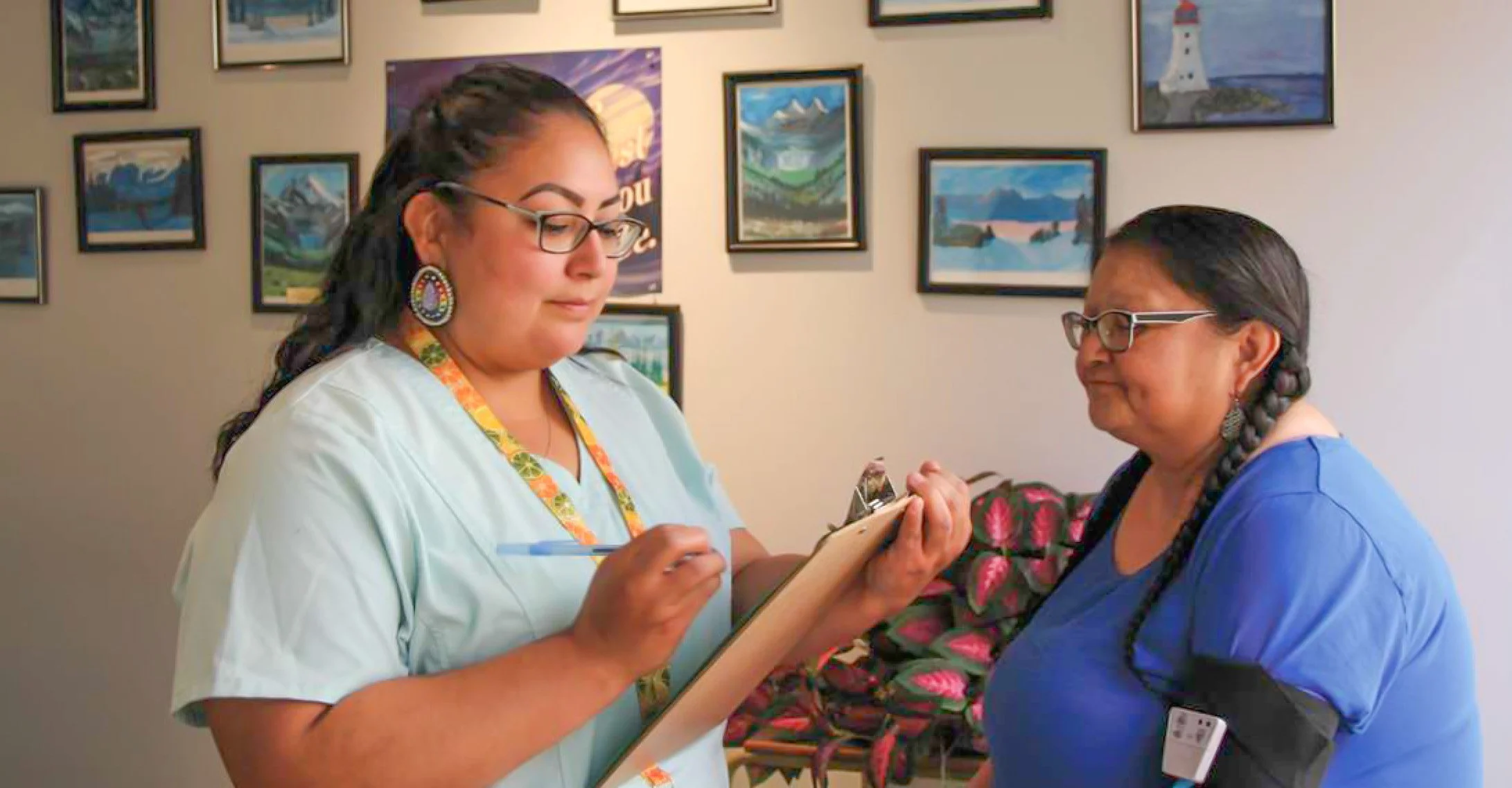
The Indigenous Health Support Worker Diploma provides students with a top-quality education in community health combined with education in Indigenous culture and healing practices.
PROGRAM DETAILS
The IHSW Diploma program consists of 20, 3-credit in-person courses and 2, 6-credit practicums that explore the nature of health and wellness as seen by both an Indigenous peoples’ and western medicine lens. These courses will provide the student an opportunity to examine health and wellness from their own perspective, from a cultural perspective and western medical perspective. In the fall and winter semester there are five 3-credit courses in the first and second year. In the spring semester, a 6-credit capstone or practicum will be delivered.
The creation of an advanced First Nations Health Administration 4-year Degree is being offered by request of the First Nations communities in the YTC Tribal Council area. Following the successful completion of the Indigenous Health Support Worker Diploma in 2021, the communities saw a need to expand the health support worker program by creating a 4-year administration degree to help support the First Nations based models of delivering health care based on their values, traditions and practices.
This program is for First Nation, Metis, Inuit members or any one who is interested in learning more about Indigenous health, high school graduates, mature students with English 30-2 or English 30-1, and for current health staff who need professional development.
ADMISSION REQUIREMENTS
Applicants are required to have completed either English 30-1 with at least 55%, or English 30-2 with at least 65%
Applicants may also enter through Mature Status defined as follows:
(i) Minimum age of twenty-one (21)
(ii) Successful completion of a skills appraisal test in Math and EnglishApplicants may also enter with special permission from the Department Head.
APPLICATION DEADLINE
Mid-May for admission in the fall.
Department Head
Normie Carlson
Department Head of Indigenous Health
normie.carlson@ytced.ca
(780) 484-0303 Ext. 510
CAREER/ACADEMIC OPPORTUNITIES
Health Liaison for both rural and urban health centers, hospitals, and clinic.
First Nation Wellness Worker, Coordinator, Facilitator and Advocate.
Indigenous Cultural Support Worker, Indigenous Health Coordinators, Indigenous Health Educator.
Indigenous Mental Health, Crisis Intervention, Grief or Trauma, Domestic Violence, and Addictions Support Worker.
PROGRAM OUTCOMES
High placement of IHSW graduates in health administration, management jobs at both the community, federal, provincial, municipal level, Indigenous Health Facilitator, Indigenous Health Advocate, Indigenous Health Outreach Worker, Indigenous Crisis Intervention Worker, Indigenous Domestic Violence Support Worker;
Increased number of First Nation people in Health Administration/Management positions in Alberta;
Understand the context of health from a contemporary and historical perspective;
Understand how First Nations health is embodied in cultural competency, and is seen as individual, fluid, and evolving;
Critically examine the biomedical model and First Nations approaches to health and wellness;
To define the differences between First Nations and Western worldviews and ways of life and how it impacts health;
To create health programs that will have meaning to First Nations people.
The capacity to promote and advocate for First Nations peoples’ health and wellness.
EDUCATION PATHWAY
Following the successful completion of the Indigenous Health Support Worker Diploma in the graduates may continue on to the second year of the First Nation Health Administration Degree. Current health administration employees can also take any number of courses for professional development purposes.
COMMUNITY PARTNERSHIPS
YTC Council, First Nation Health Centres, NNADAP programs, Youth Mental Health programs, and Edmonton area hospitals.
PROGRAM PLAN
YEAR 1
| FALL | COURSE TITLE | CREDITS |
|---|---|---|
| IHSW 100 | Interpersonal Communication & Basic Counseling | 3 | ENGL 250 | Writing Skills | 3 |
| IHSW 102 | Healing Through Ceremony | 3 | IHSW 103 | Family Relationships | 3 | CREE 100 | Introduction to Cree Language and Culture | 3 |
| WINTER | COURSE TITLE | CREDITS |
|---|---|---|
| IHSW 101 | Child Adversity & Health Outcomes | 3 |
| IHSW 104 | Mental Health | 3 |
| CREE 200 | Cree Language & Culture II | 3 | IHSW 206 | Alternative Methods of Healing | 3 |
| IHSW 106 | Determinates of Indigenous Peoples' Health in Canada | 3 |
| SPRING | COURSE TITLE | CREDITS |
|---|---|---|
| IHSW 107 | Practicum I | 6 |
YEAR 2
| FALL | COURSE TITLE | CREDITS |
|---|---|---|
| IHSW 200 | Historical Trauma | 3 |
| IHSW 207 | Suicide Prevention and Crisis Management | 3 |
| IHSW 202 | Community Development and Healing | 3 |
| IHSW 209 | Development Across The Lifespan: Birth Through Adulthood | 3 |
| LING 103 | Traditional Kinship Structures in a Contemporary Mode | 3 |
| WINTER | COURSE TITLE | CREDITS |
|---|---|---|
| IHSW 201 | Addictive Pharmaceutical and Psychotropic Drugs | 3 |
| IHSW 204 | Nutrition and Health | 3 |
| IHSW 203 | Addictions and Treatment | 3 |
| IHSW 208 | Indigenous Community Research | 3 |
| IHSW 105 | Infectious Chronic and Contagious Diseases | 3 |
| SPRING | COURSE TITLE | CREDITS |
|---|---|---|
| IHSW 210 | Practicum II | 6 |